To tell this tale, we need to go back to
August 9, 2007.
During a crazy busy evening, I took a call for an injured bird way out in New Richmond, about an hour from our house. I did tell dispatch that I would go "anywhere", and "anywhere" usually means about a 100 mile round trip.
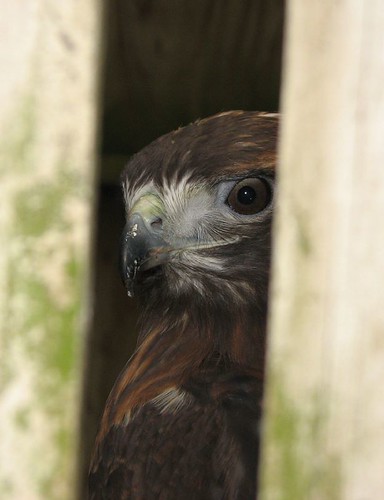
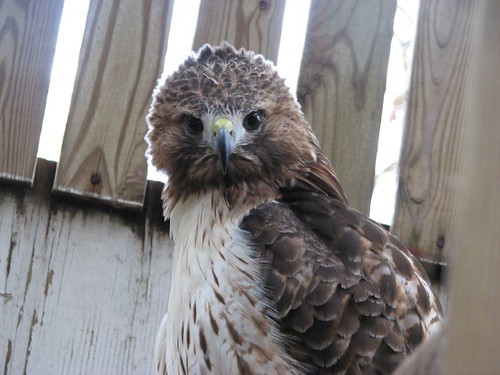
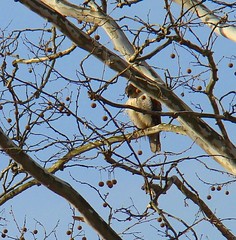
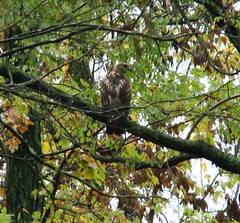
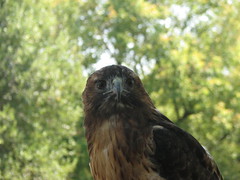
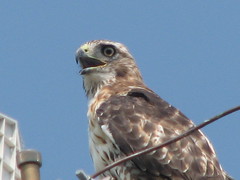
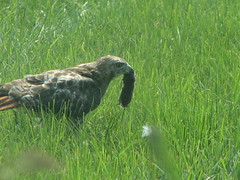
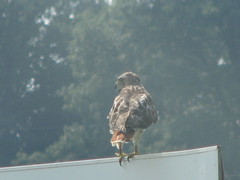
This red-tailed hawk had been caught in a net fence, almost like a mist net that banders use.
After a few weeks of rest to rehydrate, heal some bruising, and also to chow down some free meals, RT07-18
was ready to be released.
(
To explain that code..."RT" means Red-tailed hawk. "07" is the year it was admitted and "18" means it was the 18th Red-tailed hawk to be admitted that year.)
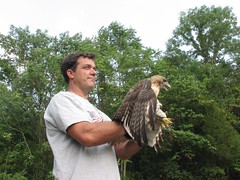
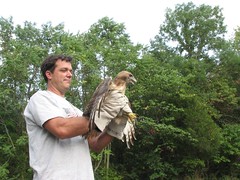
The hawk was banded, boxed up and driven back to the capture site.
I instructed the homeowner on what we were about to do and how to release the bird.
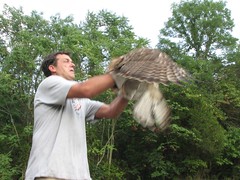
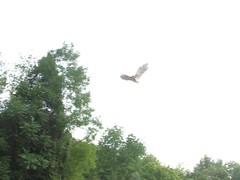
We like to take pictures of releases, because it is the climax of many hours, days, weeks, of hard work and dedication from our rehabbers. It is a feeling that blends joy, relief and a tinge of sadness and worry.
Will they make it?
Were our efforts in vain or will this bird go on to live, reproduce and do the job it was put on this earth for?
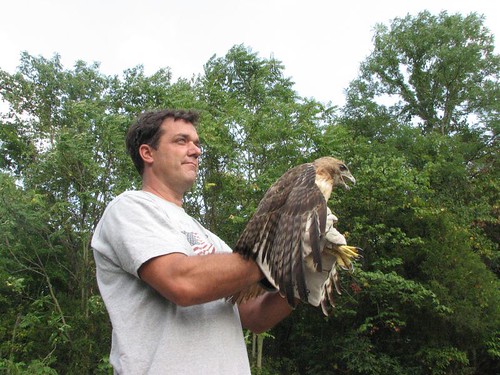
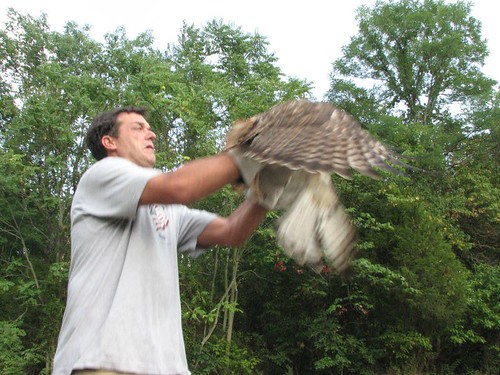
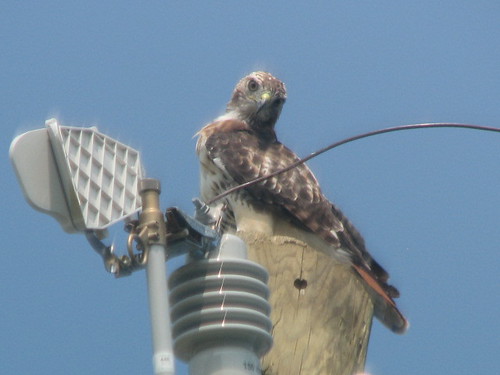
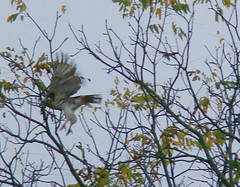
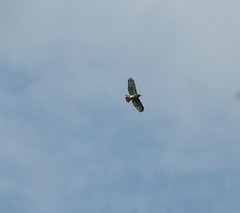
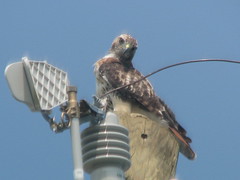
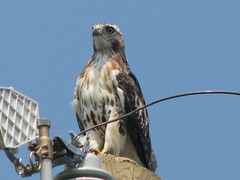
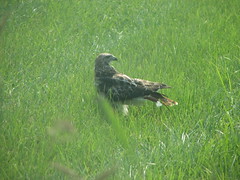
And so RT 07-18 was free to haunt the skies above New Richmond once again.
Most of the time, we never know how a released bird has fared.
A bird is considered a successful rehab if it survives at least three months after release.
Last week Dan, one of our volunteers and president of the board, got a call about a Red-tailed hawk that had been hit by a car....in New Richmond. Guess where this is going?
This bird was banded. The number was looked up, and yep...it was RT 07-18.
After examination, the bird was deemed too severely injured to attempt rehab, and it was humanely euthanized.
Now, you might be wondering why I would entitle this post "Not a sad story"?
But if we look at it from a broad view, this was a success. This particular bird lived for an additional two years after it was released, and who knows? Maybe raised a few baby hawks to send into the world?
RAPTOR, Inc. gave this hawk another chance to try and survive on this human-riddled planet. Our cars, our poisons, our
fences, all represent obstacles for birds to navigate. Rehabilitation gives these birds a way to fly again, for however long they can.
Being a rehabber is enormously difficult, both physically and emotionally. All the rehabbers at RAPTOR have convinced me that I
don't want to do this. It has been described as a "labor of love", yet it is so much more than that.
Support your local wildlife rehabilitation center. (
For a list searchable by state, click here.)
Donate funds and supplies.
Pitch in when you can.
It makes a difference.